I/We Art
I/We Art offers a diverse collection of images combining representational or abstract elements or strangeness to shine a light on the possible impact of Artificial Intelligence


AI and the Waterfall of Shapes
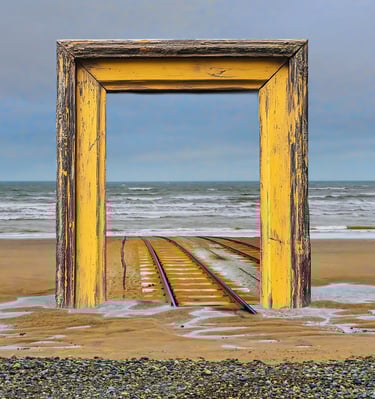
The work follows Wassily Kandinsky in seeking a balance between order and chaos. The shapes in the image represent order against the natural movement of water. The work shows the shapes constraining the flow of the waterfall. In the "I We Video" these constraints are breaking down and the water now flows through the shapes creating disorder and the possibility of chaos.
I would argue that in a world which will increasingly become driven by Artificial Intelligence with continuously shifting realities both real and imagined there will be a constant need to reconstruct order. This will result in a process of finding solutions that enable the social world to adapt and change, a kind of coming into being again and again through having to continuously adapt to these new realities. Success will result in immense joy in that moment, but the cycle will continue.

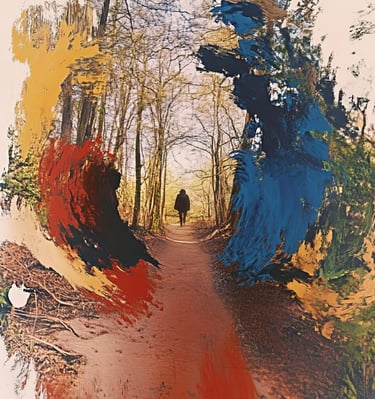
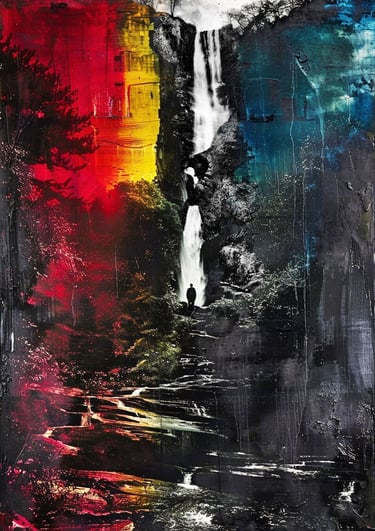
Finding Joy at Pistyll Rhaeadr
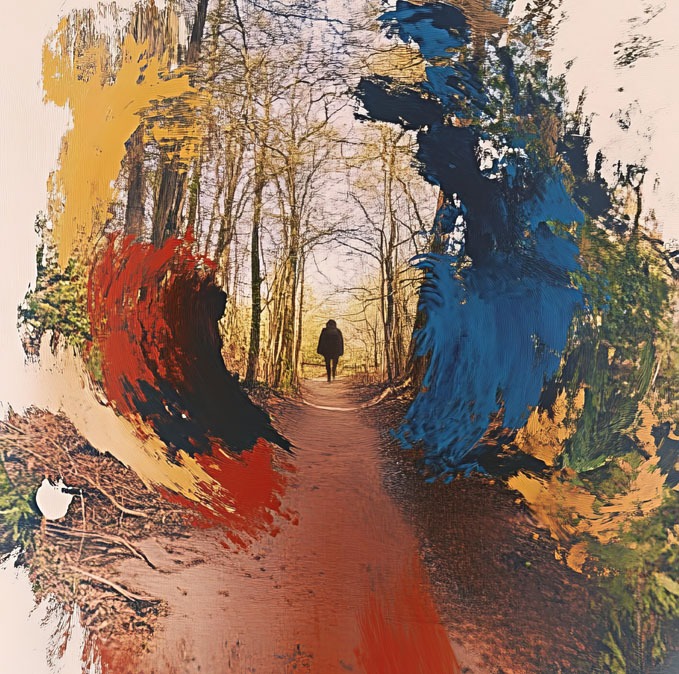
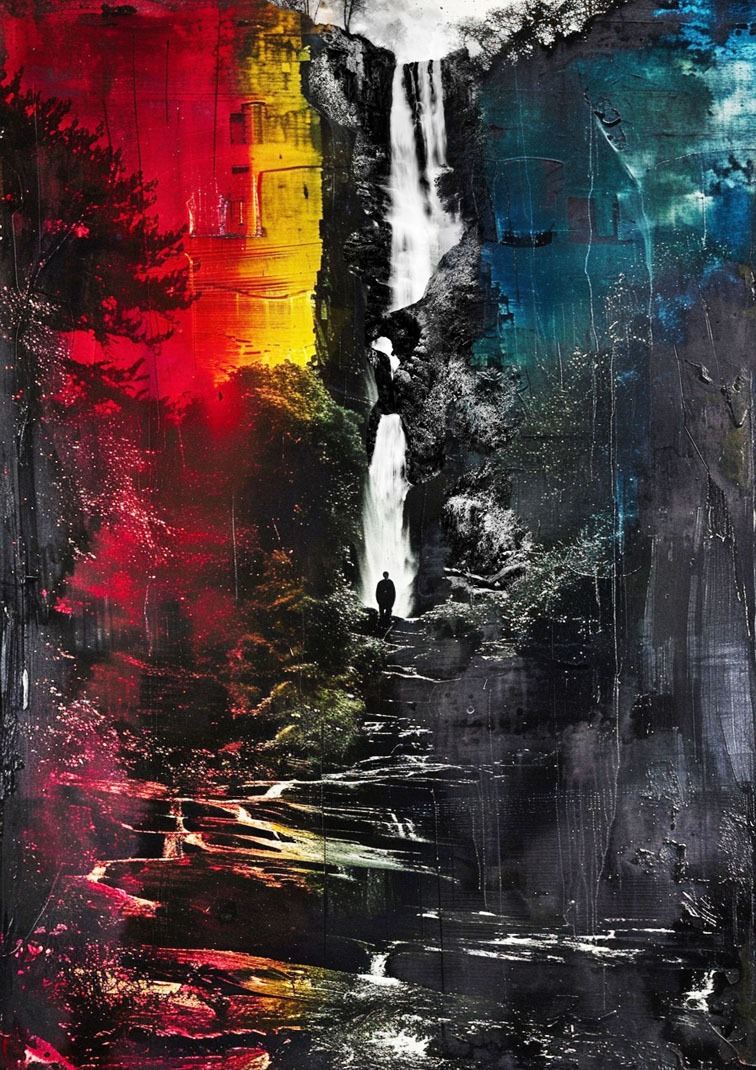
This work “Finding joy at Pistyll Rhaeadr” seeks to place you in the image to experience the scene as though you were there. The joy is that this person has found a solution to the opposing forces shown on each side of the image. The idea for the image follows “Green World” literature. This literature suggests that places in the natural world such as waterfalls or woodland can offer a magical setting allowing an escape from societal rules which can be transformative, offering insight into how conflicts can be resolved. The technigue of placing a "back-figure" in the image was used by Caspar David Friedrich and is termed Rückenfigur.


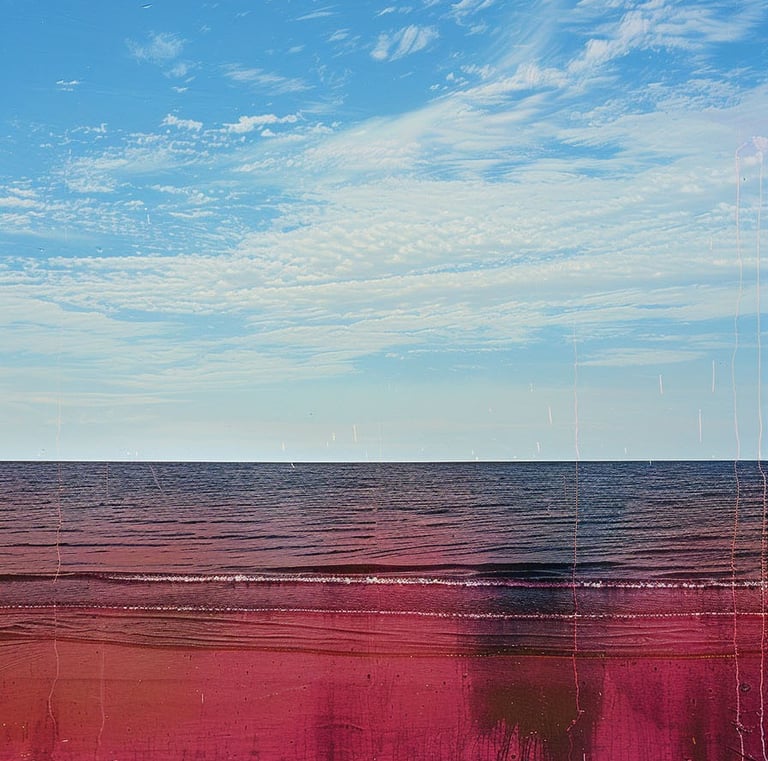
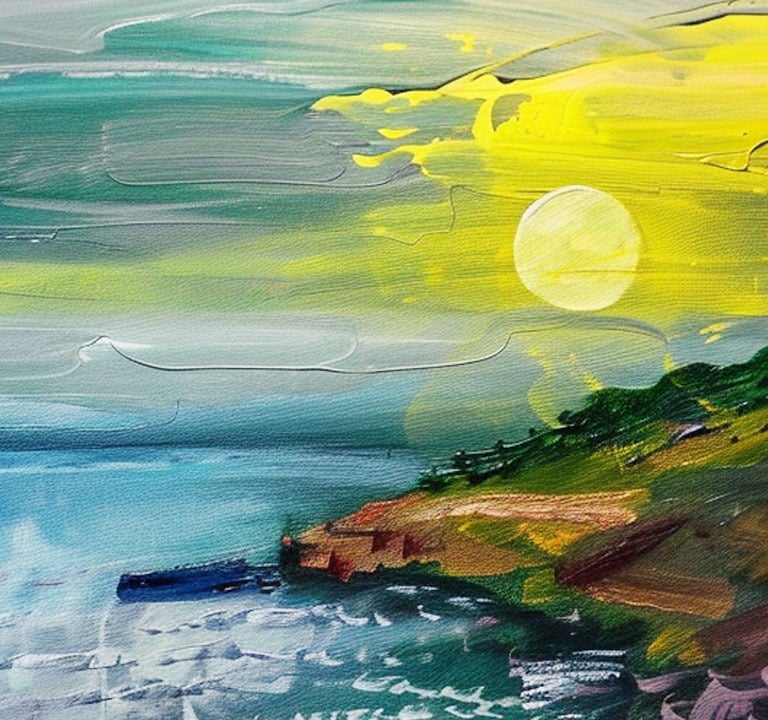
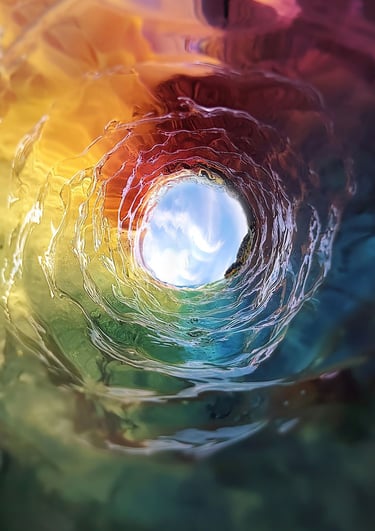
The Singularity represents the moment computers reach a kind of consciousness. This moment is now very close with predictions that it will be reached by 2029 (many belive this has already happened) . The idea for the image comes from Sabina Spielrein's work where she often used the example of the sea to explain the unconscious which is below the surface and the conscious above the surface.
The Singularity


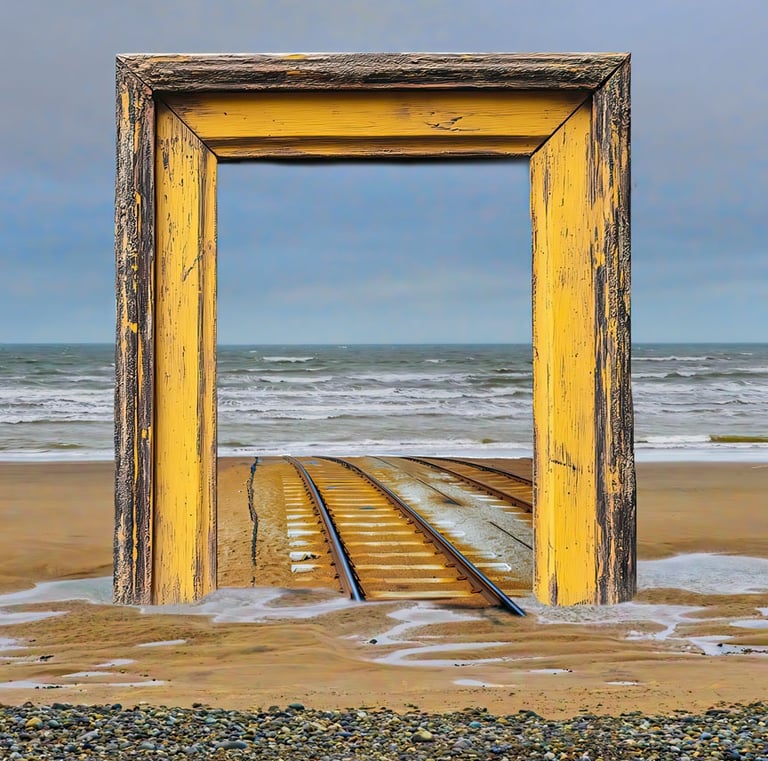
Plato’s Cave and the Two Worlds
Plato’s Cave of Shadows where the prisoners who have not experienced any other reality see the silhouettes as the only true reality. The emerging AI world can be closely compared to Plato’s Cave because AI systems are learning from our experience and not from any direct contact with the actual world.


As AI reaches the Singularity and gains a kind of consciousness it is unlikely that it will somehow remain under human control. The Doomsday Clock is set in relation to the possibility of our extinction. Technological advance notably the advance of AI is one key element that informs the setting of the Clock. The possibility of nuclear war and climate change are the other key elements. As AI reaches the singularity how will it respond to the possibility of a human led threat of extinction that would also threaten the existence of AI ?
Plato’s Cave and the Escape
I/We Art
Exploring possibilities for change through encouraging reflection on social fields and AI innovation.
Creativity
Finding ways of bringing together opposing forces.
© 2026. All rights reserved.